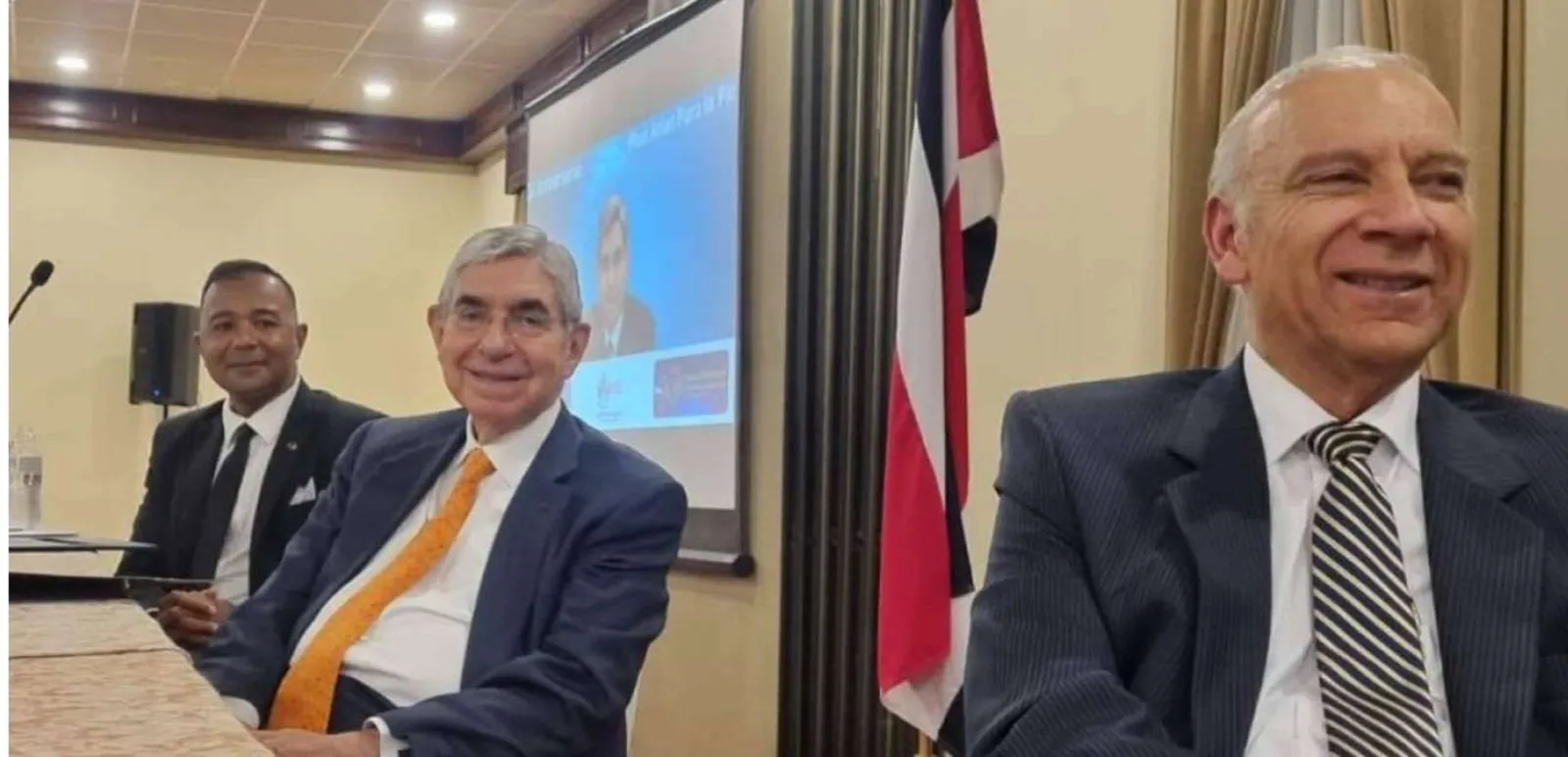
The Multilateral Chamber of Commerce and Cooperation Israel Ibero-America (now the Israel Ibero-America Chamber of Commerce) and the Costa Rica Support and Promotion Office (OSPCR), sponsored by the Association for Intercultural and Economic Humanitarian Development (ADHIE), commemorated the 36th anniversary of the Arias Peace Plan on August 8, 2023, in San José, Costa Rica. The event was attended by former President of Costa Rica and Nobel Peace Prize laureate Óscar Arias Sánchez.
August 7, 1987: the agreement that changed the history of Central America
August 7, 1987, would be a day that changed the history of Central America. Decades of war, violence, suffering, genocide of peoples and massacres of children were about to be exchanged for an agreement that no one believed in, no one except the former President of the Republic of Costa Rica, Óscar Arias Sánchez.
On that day, the presidents of Costa Rica, Guatemala, El Salvador, Honduras and Nicaragua signed in Guatemala City the agreement known as Esquipulas II, whose formal name is “Procedure for the Establishment of a Firm and Lasting Peace in Central America.”
Arias’s political conviction in favor of peace proved stronger and more persuasive than the warlike political convictions of Mikhail Gorbachev, General Secretary of the Communist Party of the Soviet Union, and Ronald Reagan, President of the United States of America, and was even recognized with the Nobel Peace Prize, which Arias received in 1987.
Exchanging war for peace and betting on peace was no simple undertaking, especially in a period as critical and polarized as the Cold War, when being neutral was almost impossible.
Costa Rica, a country with a pacifist tradition
Only a country firmly committed to a pacifist ideology could have the strength needed to raise such a heavy and dangerous banner, and that country was Costa Rica. Its pacifist tradition is so devout that it voluntarily abolished its army in 1948 in order to allocate its economic and military resources to education, health and culture.
Since 1903, Costa Rica has proudly proclaimed in its national anthem that in Costa Rica, “white and pure, peace rests!”
Esquipulas I and Esquipulas II: the presidents who made peace possible
At first, the Esquipulas II peace treaty, also known as the Arias Plan, “an hour for peace,” represented the opportunity to halt the toll of bloodshed, which reached at least 340,000 lives lost.
While it is undeniable that Costa Rica and its former President Óscar Arias were the initiating and key element in the project’s success, it also drew on the initiative of former President Vinicio Cerezo of Guatemala, who promoted the Esquipulas I treaty.
Nor should we forget the wisdom and good sense shown, at least at that time, by former Presidents José Napoleón Duarte of El Salvador, Daniel Ortega of Nicaragua and José Azcona Hoyo of Honduras, since they were the only ones who could give real value to the plan proposed by former President Vinicio Cerezo at Esquipulas I and by Óscar Arias at Esquipulas II.
Commemoration of the 36th anniversary in San José
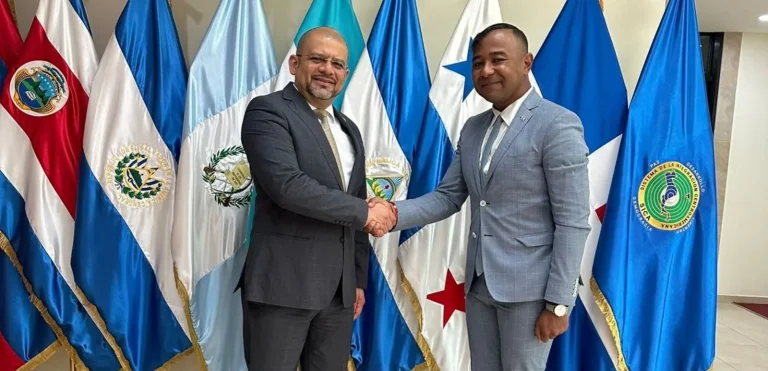
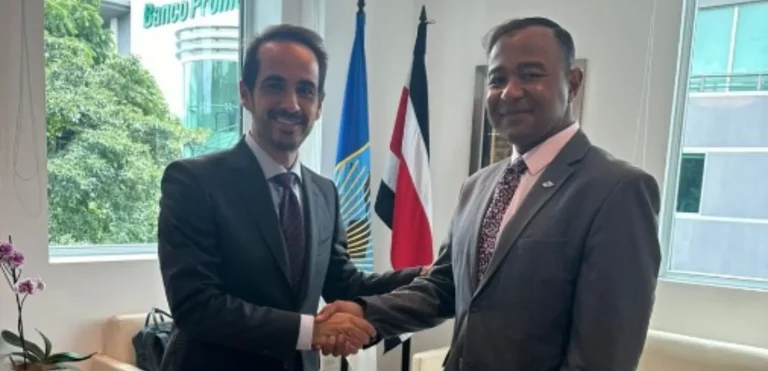
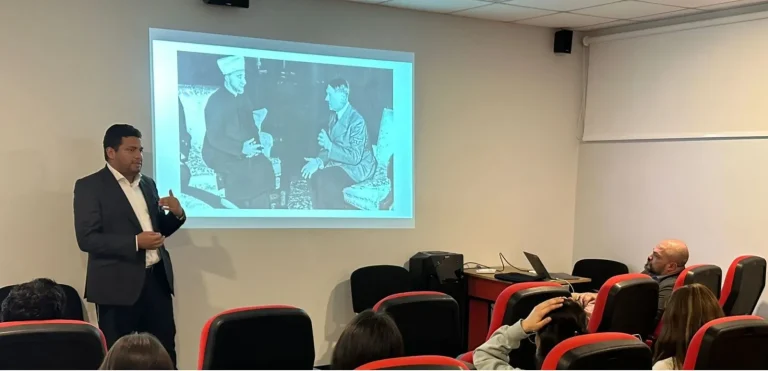
For this reason, CILIB and the OSPCR, sponsored by ADHIE, commemorated the 36th anniversary of the Arias Peace Plan on August 8. The event was held in San José, Costa Rica, and was led by Mr. Paul Stephen, CILIB regional director in Costa Rica. Participants included:
- Former President of Costa Rica and Nobel Peace Prize laureate Óscar Arias Sánchez, who attended the event.
- Mr. Carlos Rivera Bianchini, former Vice Minister of Foreign Affairs of Costa Rica.
- Costa Rican pianist Jacques Sagot.
- Mr. David O. Abraham, CILIB President, who participated remotely.
Peace as a path to resolving conflicts
Had the Costa Rican government of that time not advocated for peace in Central America, today, instead of commemorating a moment of joy, we would be remembering an even greater tragedy. That is why it is important to celebrate the examples that show that violence is neither the only path nor the wisest path to resolving conflicts.
Today, in view of the Russian invasion of Ukraine and potential wars in Africa, it is important to remember and highlight worldwide those examples that confirm that another path to resolving conflicts, one that does not rely on weapons, is possible if the parties so wish and their peoples demand it. Ideally, one day peace will be the only power that prevails on planet Earth.
The Chamber and the culture of peace
The culture of peace is also present in the work of the Israel Ibero-America Chamber of Commerce (CILIB). Learn about the Concert for Peace, which commemorates the abolition of the Costa Rican army. See the country profiles for Costa Rica and Guatemala.